

In a world increasingly aware of environmental concerns, organic baby clothes have emerged as a popular choice for eco-conscious parents. These garments, made from natural fibers and free from harmful chemicals, provide a safe and gentle option for delicate baby skin. As parents strive to create a nurturing environment, the appeal of organic fabrics grows stronger.
Choosing organic baby clothes isn’t just about safety; it’s also about sustainability. By opting for these products, parents support ethical farming practices and reduce their carbon footprint. With a variety of stylish designs and colors available, organic baby clothes combine comfort and fashion, ensuring little ones look adorable while making a positive impact on the planet.
What Are Organic Baby Clothes?
Organic baby clothes consist of garments made from natural fibers, produced without harmful chemicals or synthetic materials. These clothes prioritize the well-being of babies and the environment.
Definition and Characteristics
Organic baby clothes are typically crafted from materials like organic cotton, bamboo, or hemp. Organic cotton grows without synthetic pesticides or fertilizers, ensuring a safe product for sensitive skin. Characteristics include:
- Natural Fibers: Use fibers free from harmful processing chemicals.
- GOTS Certification: Often certified by the Global Organic Textile Standard, ensuring compliance with organic farming practices.
- Biodegradable: Break down naturally without releasing toxins into the environment.
- Softness: Typically softer than conventional fabrics due to the absence of chemical treatments.
Benefits of Choosing Organic Materials
- Gentleness on Skin: Organic materials reduce the risk of rashes, allergies, and irritations on delicate skin.
- Environmental Safety: Production practices promote sustainable agriculture, reducing negative impacts on soil and water.
- Chemical-Free: Free from toxic substances, supporting a healthier planet.
- Ethical Practices: Often produced with fair labor standards, ensuring humane working conditions.
- Durability: Organic fibers generally offer better longevity, contributing to less waste.
Types of Organic Baby Clothes
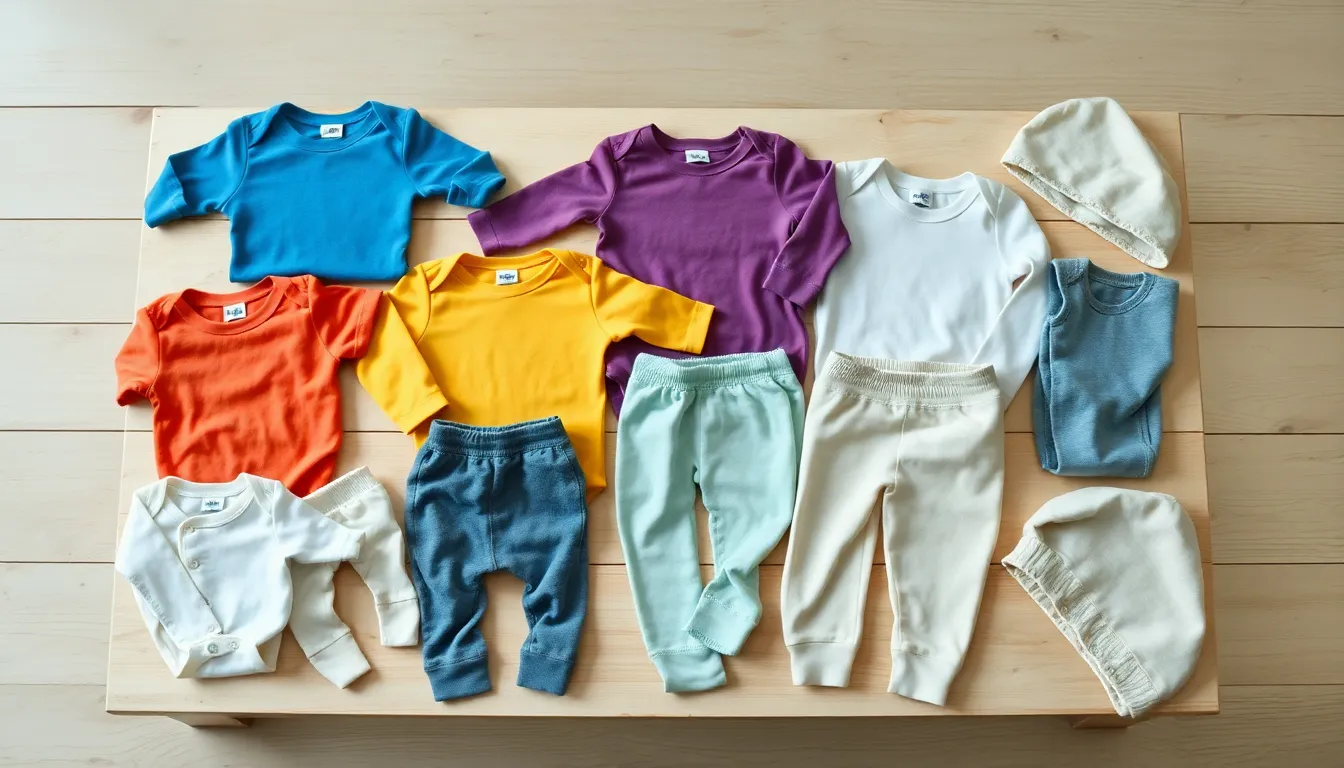
Organic baby clothes include a variety of styles tailored for daily use and special occasions. These garments prioritize comfort and safety while ensuring sustainability.
Everyday Wear
Everyday wear consists of basic essentials suitable for daily activities. Common items include:
- Onesies: Made from organic cotton, these garments provide comfort and easy changes.
- T-Shirts: Soft and breathable, they allow moisture control, keeping babies comfortable.
- Pants: Stretchy organic cotton pants offer flexibility for crawling and playing.
- Socks: Organic socks protect tiny feet while minimizing exposure to chemicals.
- Hats: Made from lightweight materials, hats shield sensitive skin from sun exposure.
Everyday wear enables ease of dressing while promoting the well-being of both baby and environment.
Specialty Clothing
Specialty clothing includes items designed for particular occasions or needs. Examples include:
- Sleepwear: Organic pajamas ensure a safe, chemical-free sleeping environment.
- Outerwear: Organic jackets provide warmth without harmful materials, ideal for cooler weather.
- Dressy Outfits: Smartly designed outfits made from organic or recycled materials are perfect for events.
- Swimwear: Eco-friendly swimwear options made from recycled materials ensure comfort in the water.
- Accessories: Organic bibs and blankets provide added comfort and style, focusing on functionality.
Specialty clothing allows parents to choose fashionable yet eco-friendly options for various events.
Popular Brands of Organic Baby Clothes
Several brands specialize in organic baby clothes, each offering unique benefits for eco-conscious parents. These brands prioritize sustainability while providing stylish and comfortable options for infants.
Brand Comparisons
- Burt’s Bees Baby: Known for its soft organic cotton fabric, Burt’s Bees Baby provides an extensive range of everyday essentials, including onesies and sleepwear. The brand’s commitment to sustainable practices ensures high-quality products free from harmful chemicals.
- Mori: Mori combines organic cotton and bamboo to create ultra-soft and breathable baby clothes. Its minimalist designs focus on comfort and style, appealing to modern parents while maintaining eco-friendly production methods.
- RuggedButts: RuggedButts emphasizes organic cotton in its playful and durable baby clothing. This brand stands out for its trendy designs and rugged appeal, providing fun options for little adventurers.
- Finn + Emma: Finn + Emma emphasizes organic materials and fair trade practices. Its clothing features charming designs with unique prints, making it a popular choice among parents seeking both style and sustainability.
Sustainability Practices
- Materials: Brands producing organic baby clothes primarily use certified organic cotton, bamboo, or hemp. These materials undergo cultivation without pesticides, herbicides, or synthetic fertilizers, ensuring environmental safety and promoting sustainable farming.
- Manufacturing: Many brands maintain ethical labor standards throughout their supply chains. They often work with manufacturers who prioritize fair wages and safe working conditions, contributing positively to communities.
- Packaging: Sustainable brands typically use eco-friendly packaging made from recycled materials. This commitment to reducing waste extends to shipping practices that minimize environmental impact.
- Certifications: Several brands obtain certifications such as Global Organic Textile Standard (GOTS) or OEKO-TEX. These certifications ensure products contain organic fibers and comply with stringent environmental and safety criteria.
Care and Maintenance of Organic Baby Clothes
Organic baby clothes require specific care to maintain their quality and extend their lifespan. Proper maintenance ensures the garments remain soft and safe for delicate skin while preserving their eco-friendly benefits.
Washing Instructions
Wash organic baby clothes in cold water using a gentle detergent to minimize fabric wear and preserve colors. Avoid bleach and fabric softeners to maintain natural fibers’ integrity. Line drying or tumble drying on low heat extends the life of these garments. For added softness, parents can opt for natural drying methods. Regular washing keeps these clothes clean and comfortable without damaging the organic materials.
Longevity and Durability
Organic baby clothes exhibit remarkable durability due to the quality of natural fibers. With proper care, these garments can withstand frequent washing without losing shape or comfort. Organic cotton and bamboo fibers are particularly resilient, ensuring they resist fraying and fading over time. Choosing high-quality organic baby clothes translates to fewer replacements and less environmental waste, benefiting both families and the planet.
Choosing organic baby clothes is a thoughtful decision that benefits both infants and the environment. These garments offer a safe and gentle option for delicate skin while promoting sustainable practices. Parents can take comfort in knowing they’re supporting ethical farming and reducing their carbon footprint with each purchase.
With a variety of stylish designs available for everyday wear and special occasions, organic baby clothes combine comfort and fashion effortlessly. By selecting brands committed to quality and sustainability, parents can ensure their little ones are dressed in the best. Embracing organic clothing not only nurtures babies but also contributes to a healthier planet for future generations.
